The Sacred Echo: How Qira’at and the Art of the Qari Originated from Spoken Arabic
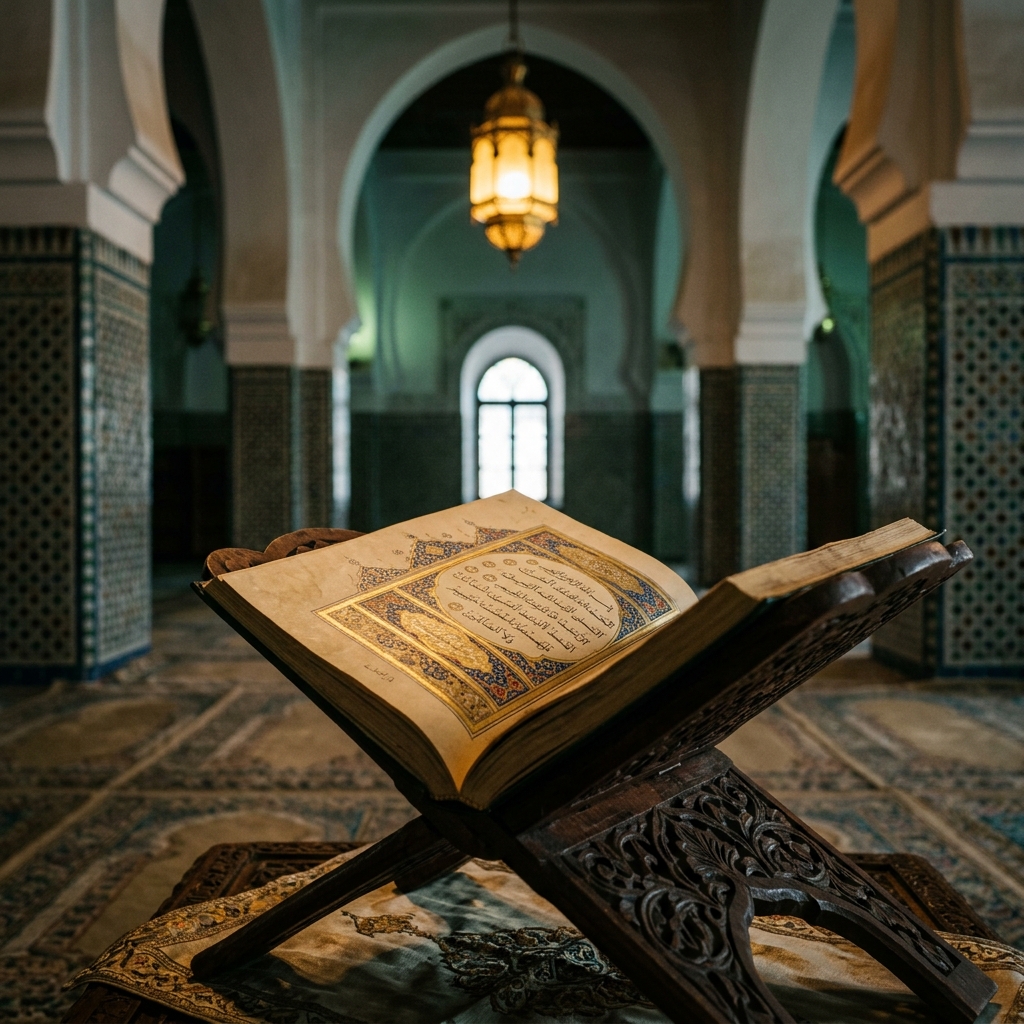
When you listen to the Holy Quran recited in the Grand Mosque of Makkah, you are hearing the voice of an Imam reciting according to the transmission of Hafs from Asim. Yet, if you travel across North Africa—through Morocco, Algeria, or Mauritania—you will step into masajid where the congregation recites in unison according to Warsh from Nafi’, with its elongated vowels, softened glottal stops, and distinct acoustic cadence. In parts of Sudan and Somalia, you may hear the rhythmic transmission of Al-Duri from Abu ‘Amr, while in Libya and Tunisia, Qalun from Nafi’ echoes through the minarets.
To the untrained ear, these differences might spark curiosity or even confusion: Are these different versions of the Quran? How did conversational Arabic spoken in the dusty valleys of 7th-century Arabia give rise to this sophisticated, mathematically precise science of recitation? And what is the sacred legacy of the Qari (reciter) who carries this divine trust?
Far from being modern innovations or regional discrepancies, these canonical readings—known collectively as the Qira’at—are an integral part of the divine revelation itself. They reflect an extraordinary journey: from the conversational dialects of ancient Arabian tribes to a divinely sanctioned concession of mercy, preserved through an unbroken oral chain of human voices spanning over fourteen centuries.
1. The Linguistic Landscape: Conversational Arabic in 7th-Century Arabia
To understand where the Qira’at came from, one must first step into the linguistic world into which the Prophet Muhammad ﷺ was born.
Pre-Islamic Arabia was an oral civilization par excellence. The Arabs possessed no imperial palaces, naval fleets, or monumental stone architecture; their monument was their language. Poetry was their historical record, their diplomatic currency, and their highest artistic achievement.
However, the Arabian Peninsula was not linguistically monolithic. While there existed a high literary register understood across tribal boundaries (al-Lughah al-Fushta al-Mushtarakah), the everyday conversational Arabic (al-lahajat) varied significantly across regions and tribes:
The Major Dialectal Blends
- The Hijazi Dialects (Quraysh, Hudhayl, Thaqif, Kinanah):
- Spoken in western Arabia (Makkah, Madinah, Ta'if).
- Characterized by Tashil al-Hamz (softening or dropping the harsh glottal stop). For example, pronouncing al-mu'min as al-mumin, or al-dhi'b (wolf) as al-dhib.
- Known for linguistic elegance and smoothness, enriched by Makkah's status as a bustling sanctuary and international trading crossroad.
- The Najdi and Eastern Dialects (Banu Tamim, Asad, Bakr, Rabi'ah):
- Spoken in the central plateau and eastern plains.
- Characterized by Tahqiq al-Hamz (sharp, assertive pronunciation of every glottal stop).
- Inclination toward Imalah (slanting the open 'a' vowel towards an 'e' or 'ay' sound).
- Frequent use of Idgham (merging adjacent consonants together for phonetic economy).
- Phonetic and Morphological Nuances:
- Some tribes pronounced the imperfect verb prefixes with a kasrah (an acoustic phenomenon known to Arab grammarians as Taltalah, such as saying ti'lamun instead of ta'lamun).
- Some tribes used different pronouns or variations in vowel endings for feminine and plural forms.
- Certain synonymous terms were favored by one tribe over another (e.g., using ‘ajjil versus asri’ for "hurry", or ar-ra’i versus an-nazir for "looker").
Despite these everyday differences, every tribe fiercely guarded its dialect as a badge of ancestral honor. When an elder from Banu Tamim spoke, his vocal cords were physically habituated to patterns distinct from an elder from Quraysh or Hudhayl.
2. The Divine Concession: Revelation in Seven Ahruf (Sab'atu Ahruf)
When the Prophet Muhammad ﷺ received the first revelations in the Cave of Hira, the Quran was revealed in the primary dialect of Quraysh—the most refined and universally respected register of Arabic.
During the early Makkan period, the Muslim community was small and composed largely of Qurayshis and nearby Hijazis. But after the Hijrah (migration) to Madinah, the demographic landscape of Islam underwent a seismic shift. Bedouin tribes from across the peninsula entered the fold of Islam in waves: elderly men, women, children, and illiterate nomads (Ummiyyun) who had never read a script and whose vocal tracts had been shaped for sixty years by their local dialects.
To force an elderly desert-dweller from Banu Tamim or Hawazin to completely abandon his lifelong pronunciation of vowels or glottal stops overnight would have imposed an insurmountable barrier to memorizing and living by the Word of Allah.
Here, divine mercy intervened. Through a special concession granted by Allah, the Quran was revealed in Seven Ahruf (plural of Harf, meaning modes, facets, or dialectal styles).
                      ┌─────────────────────────────────────────┐
                      │    Divine Revelation from Allah ﷻ       │
                      └────────────────────┬────────────────────┘
                                           │
                                           ▼
                      ┌─────────────────────────────────────────┐
                      │ Delivered via Jibril (AS) to the        │
                      │ Prophet Muhammad ﷺ in 7 Ahruf (Modes)   │
                      └────────────────────┬────────────────────┘
                                           │
                  ┌────────────────────────┴────────────────────────┐
                  ▼                                                 ▼
      ┌─────────────────────────┐                       ┌─────────────────────────┐
      │ Divine Ease (Taysir)    │                       │ Preserved Oral Core     │
      │ Accommodating tribal    │                       │ Zero contradiction in   │
      │ dialects & phonetics    │                       │ theology or meaning     │
      └─────────────────────────┘                       └─────────────────────────┘
Authentic Hadiths on the Seven Ahruf
The revelation of the Quran in seven Ahruf is documented in multiple mutawatir (mass-narrated) Hadith across the most authoritative collections:
The Incident of Umar and Hisham ibn Hakim
In Sahih al-Bukhari and Sahih Muslim, Umar ibn al-Khattab (may Allah be pleased with him) narrates a striking encounter that illustrates how even the closest companions initially grappled with these variations:
Umar ibn al-Khattab narrated:
"I heard Hisham ibn Hakim reciting Surah Al-Furqan during the lifetime of the Messenger of Allah ﷺ. I listened to his recitation and noticed that he was reciting it in several different ways which the Messenger of Allah ﷺ had not taught me. I was about to jump upon him in his prayer, but I waited patiently until he finished.Then I grabbed him by his cloak around his neck and said: 'Who taught you this Surah that I heard you reciting?' He replied: 'The Messenger of Allah ﷺ taught it to me.' I said: 'You have lied! For by Allah, the Messenger of Allah ﷺ taught me this very Surah, but differently from how you recited it!'
So I dragged him to the Messenger of Allah ﷺ and said: 'O Messenger of Allah! I heard this man reciting Surah Al-Furqan in a manner you did not teach me!' The Messenger of Allah ﷺ said: 'Release him, O Umar. Recite, O Hisham.'
Hisham recited in the manner I had heard him recite. The Messenger of Allah ﷺ said: 'Thus was it revealed (Hākadhā unzilat).'
Then the Prophet ﷺ said: 'Recite, O Umar.' So I recited as he had taught me. The Messenger of Allah ﷺ said: 'Thus was it revealed.'
Then the Messenger of Allah ﷺ added: 'Indeed, this Quran has been revealed in seven modes (Sab'atu Ahruf). So recite whichever of them is easy for you.'"
(Sahih al-Bukhari, Hadith 4992; Sahih Muslim, Hadith 818)
The Supplication for the Ummah at the Pool of Banu Jadhima
In another deeply moving narration in Sahih Muslim, the Prophet ﷺ reveals why this concession was granted:
Ubayy ibn Ka'b (may Allah be pleased with him) reported:
*"The Messenger of Allah ﷺ was at the pool of Banu Jadhima when Jibril (Gabriel) came to him and said: 'Allah has commanded you to recite the Quran to your people in one mode (Harf).'The Prophet ﷺ said: 'I ask Allah His pardon and forgiveness; my Ummah does not have the capacity for that.'
Then Jibril returned a second time and said: 'Allah commands you to recite the Quran to your people in two modes.'
The Prophet ﷺ repeated: 'I ask Allah His pardon and forgiveness; my Ummah does not have the capacity for that.'
Jibril came a third time, and the Prophet ﷺ made the same plea. Finally, Jibril came the fourth time and said: 'Allah has commanded you to recite the Quran to your people in seven modes (Sab'atu Ahruf). Whichever mode they recite in, they have recited correctly.'"*
(Sahih Muslim, Hadith 821)
Jibril's Step-by-Step Grant
Abdullah ibn Abbas (may Allah be pleased with him) narrated that the Messenger of Allah ﷺ said:
"Jibril recited the Quran to me in one mode (Harf), and I continued to ask him for more, and he kept increasing it for me until it reached seven modes."(Sahih al-Bukhari, Hadith 4991; Sahih Muslim, Hadith 819)
These narrations provide irrefutable proof: the variations were not accidental mispronunciations, dialectal corruptions, or later inventions. They were divinely dictated transmissions brought by Archangel Jibril from the Preserved Tablet (Al-Lawh al-Mahfuz) to the heart of the Prophet ﷺ.
3. Ahruf vs. Qira'at: Clearing the Great Misconception
One of the most persistent misunderstandings among both Muslims and non-Muslim observers is the conflation of the Seven Ahruf with the Seven (or Ten) Qira'at.
| Concept | The Seven Ahruf (Sab'atu Ahruf) | The Canonical Qira’at (Al-Qira’at al-Ashr) |
|---|---|---|
| Origin | Directly revealed by Allah through Jibril to the Prophet ﷺ during his lifetime. | Formalized schools of recitation codified by master reciters in the 2nd–4th centuries AH. |
| Nature | A divine concession accommodating the core dialectal habits of 7th-century Arab tribes. | Precise oral transmissions preserving the facets of the Ahruf that align with the Uthmanic script. |
| Number | Exactly seven, as defined in authentic Hadith. | Ten canonical mutawatir recitations (often summarized as seven due to Ibn Mujahid's book). |
| Scope | Encompassed broader lexical and stylistic allowances for initial pedagogical ease. | Strictly codified, fixed phonetic systems; not a single letter or elongation can be altered. |
As the great 8th-century master of Quranic sciences, Imam Ibn al-Jazari (d. 833 AH), clarified in his magnum opus Al-Nashr fi al-Qira'at al-Ashr:
"The majority of early and later scholars agree that the Uthmanic codices contain what could be accommodated of the Seven Ahruf in their skeletal script, confirmed during the Final Review (Al-'Ardah al-Akhirah) between the Prophet ﷺ and Jibril."
4. The Critical Turning Point: The Uthmanic Compilation and Standardization
During the lifetime of the Prophet ﷺ, the Quran was fully written down on parchment, palm stalks, shoulder blades, and flat stones, but it was primarily preserved in the living memory of hundreds of companions who carried it in their hearts.
The Threat of Division: The Azerbaijan Campaign
By the Caliphate of Uthman ibn Affan (RA) (around 25–30 AH / 646–651 CE), the borders of the Islamic world had expanded breathtakingly from North Africa to the frontiers of Central Asia. Muslim armies comprised soldiers from different regions:
- The Syrian forces had learned their recitation from Ubayy ibn Ka'b and Abu al-Darda.
- The Iraqi forces of Kufah had learned from Abdullah ibn Mas'ud.
- The forces of Basrah had learned from Abu Musa al-Ash'ari.
During the joint military expedition to Armenia and Azerbaijan, soldiers from these different provinces met. Because of dialectal nuances and differing Ahruf, soldiers heard each other reciting verses with unfamiliar variations. Heated arguments erupted in the encampment: "My recitation is better than yours! Your recitation is invalid!"
Standing among them was the venerable companion Hudhayfah ibn al-Yaman (RA). Horrified by the specter of theological schism, Hudhayfah rode immediately to Madinah, entered the presence of Caliph Uthman, and urgently pleaded:
"O Commander of the Faithful! Save this Ummah before they differ regarding the Book of Allah like the Jews and Christians differed before them!"
(Sahih al-Bukhari, Hadith 4987)
  Regional Disagreements in Armenia/Azerbaijan
  (Syrians vs. Kufans vs. Basrans disputing readings)
                     │
                     ▼
  Hudhayfah ibn al-Yaman rushes to Madinah:
  "Save this Ummah before they differ like the Jews and Christians!"
                     │
                     ▼
  Caliph Uthman commissions Master Editorial Committee:
  - Zayd ibn Thabit (Chief Scribe)
  - Abdullah ibn al-Zubayr
  - Sa'id ibn al-'As
  - Abdur-Rahman ibn al-Harith ibn Hisham
                     │
                     ▼
  Codification of Master Skeletal Archetypes (Rasm al-Uthmani)
  - Written without dots (Nuqat) and vowel marks (Tashkeel)
  - Accommodated authentic variant readings from the Final Review
                     │
                     ▼
  Masaahif dispatched with Official Master Reciters (Qurra')
  Makkah │ Madinah │ Kufah │ Basrah │ Damascus
The Uthmanic Masterstroke: The Rasm without Dots
Caliph Uthman took immediate, decisive action. He formed an elite committee of four master scribes:
- Zayd ibn Thabit (RA) — The primary scribe who had recorded the revelation directly under the Prophet's dictation.
- Abdullah ibn al-Zubayr (RA) — Renowned scholar and Qurayshi noble.
- Sa'id ibn al-'As (RA) — Celebrated for the purity of his classical Arabic diction.
- Abdur-Rahman ibn al-Harith (RA) — Senior scholar of Quraysh.
Uthman instructed them: "If you and Zayd disagree on any point of Arabic spelling in the Quran, write it in the dialect of Quraysh, for it was revealed primarily in their tongue."
The committee retrieved the authentic master sheets (al-Suhuf) compiled under Caliph Abu Bakr (RA), which had been safeguarded by Hafsah bint Umar (RA), the Prophet's widow. From these, they meticulously transcribed several official copies (Al-Masaahif al-Amsar).
The Genius of Ancient Orthography
In the 7th century, Arabic script was written without diacritical dots (I'jam) and without short vowel markers (Tashkeel). For example, the bare consonantal skeletal structure:
$$\text{فتبينوا \quad versus \quad فتثبتوا}$$
In unpointed script, both words shared the exact same skeletal strokes: (فـ تـ ٮـ ٮـ ٮـ و).
Likewise, the word (ملك) can be read as:
- مَالِكِ (Māliki — "Owner/Master")
- مَلِكِ (Maliki — "King/Sovereign")
This was not an accident or primitive deficiency; it was an act of divine architectural brilliance. The skeletal script (Rasm al-Uthmani) was deliberately designed to encompass and preserve the multiple authentic oral readings that the Prophet ﷺ had validated during his Final Review (Al-'Ardah al-Akhirah) with Jibril!
Any reading that had an authentic chain of transmission and conformed to this skeletal script was preserved. Any personal explanatory notes that companions had scribbled in their private manuscripts (such as Ibn Mas'ud adding the word mutatabi'at to clarify consecutive fasts) were retired, and personal codices were gathered and buried or burned to prevent future generations from mistaking marginal commentary for divine text.
5. The Sending of the Qurra': The Oral Transmission Priority
A crucial historical fact often overlooked is this: Caliph Uthman did not merely dispatch written books to the major cities; he sent an authorized master reciter with every copy.
- To Makkah, he sent Abdullah ibn al-Sa’ib (RA).
- In Madinah, Zayd ibn Thabit (RA) remained as the chief reciter.
- To Kufah, he confirmed Abu Abdur-Rahman al-Sulami (who had learned from Ali ibn Abi Talib and Ibn Mas'ud).
- To Basrah, he sent Amir ibn Abd al-Qays.
- To Damascus (Al-Sham), he sent Al-Mughirah ibn Abi Shihab al-Makhzumi.
This cemented the inviolable principle of Quranic preservation: The written text is always subservient to the verified oral transmission. In Islam, you cannot learn the Quran simply by opening a book and guessing its pronunciation; it must be received directly from the mouth of a qualified teacher through direct audition (Sama') and recitation before a master ('Ard).
6. How the "Qari" Evolved: From Conversational Speaker to Sacred Custodian
In the earliest decades of Islam, the word Qari (plural: Qurra') had a broad meaning. It referred to the elite class of companions who had not only memorized the Quran, but who understood its legal rulings, theological depth, and spiritual imperatives. The early Qurra' were the spiritual and civic leaders of the community.
However, as the generations passed and hundreds of thousands of non-Arabs from Persia, the Byzantine territories, Egypt, and Central Asia embraced Islam, the everyday spoken language began to shift. The pristine classical tongue was diluted by colloquial speech (al-'Ammiyyah), and subtle grammatical errors (Lahn) began to surface in conversational Arabic.
To safeguard the Word of Allah from the slightest phonetic drift, a dedicated class of scholars emerged across the Islamic world who devoted their entire lives exclusively to the vocal mechanics, phonetics, and transmission chains of the Quran.
They developed the intricate science of Tajweed:
- Makharij al-Huruf: The precise anatomical points of articulation for each of the 28 Arabic letters (throat, tongue, lips, nasal cavity).
- Sifat al-Huruf: The intrinsic phonetic attributes (whisper vs. loudness, softness vs. firmness, elevation vs. depression).
- Ahkam al-Madd wa al-Ghunnah: Mathematical duration of vowel elongations and nasal resonances.
- Waqf wa Ibtida: The science of stopping and starting, ensuring that the meaning of a verse is never distorted by an ill-placed breath.
Thus, the conversational speaker of Arabic transformed into the certified Qari—an authorized master carrying a documented, unbroken Isnad (chain of transmission) connecting his tongue directly back through the generations to the lips of the Prophet Muhammad ﷺ.
7. The Three Non-Negotiable Pillars of an Authentic Qira'ah
By the 3rd and 4th centuries AH, dozens of recitation variants were circulating across Islamic metropolises. To establish absolute scientific distinction between authentic divine revelation and rare or aberrant readings, the scholars formulated the Three Irreducible Pillars of an Authentic Qira’ah (Arkan al-Qira'ah al-Sahiha).
As codified in the famous didactic poem Tayyibat al-Nashr by Imam Ibn al-Jazari:
فَكُلُّ مَا وَافَقَ وَجْهَ نَحْوِ ... وَكَانَ لِلرَّسْمِ احْتِمَالًا يَحْوِي
وَصَحَّ إِسْنَادًا هُوَ الْقُرْآنُ ... فَهَذِهِ الثَّلَاثَةُ الأَرْكَانُ
"Every reading that conforms to the rules of Arabic grammar,
And is accommodated by the skeletal script of the Uthmanic Mushaf,
And has an authentic, unbroken chain of transmission—that is the Quran;
These are the three foundational pillars."
               ┌──────────────────────────────────────────────────────────┐
               │    THE THREE PILLARS OF AN AUTHENTIC QIRA'AH             │
               └────────────────────────────┬─────────────────────────────┘
                                            │
        ┌───────────────────────────────────┼───────────────────────────────────┐
        ▼                                   ▼                                   ▼
┌───────────────────────┐       ┌───────────────────────┐       ┌───────────────────────┐
│  1. Unbroken Isnad    │       │ 2. Uthmanic Rasm      │       │ 3. Arabic Grammar     │
│  (Sihhat al-Sanad)    │       │ (Muwafaqat al-Rasm)   │       │ (Muwafaqat al-Nahw)   │
│ Continuous, mass-     │       │ Must conform to the   │       │ Must align with sound │
│ narrated (Tawatur) or │       │ unpointed skeletal    │       │ classical Arabic      │
│ authentic chain back  │       │ script of Uthman's    │       │ grammatical & lexical │
│ to the Prophet ﷺ      │       │ standard Mus-hafs     │       │ rules                 │
└───────────────────────┘       └───────────────────────┘       └───────────────────────┘
If a recitation fails even one of these three conditions:
- It is rejected as Shadhdh (anomalous/irregular).
- It cannot be recited in Salah (prayer).
- It cannot be claimed as part of the revealed Quran, even if it carries a plausible personal chain from an individual companion.
8. Ibn Mujahid’s Codification: The Ten Canonical Recitations
In the year 324 AH (936 CE), the preeminent scholar of Baghdad, Abu Bakr Ahmad ibn Mujahid, authored a groundbreaking work titled Kitab al-Sab'ah fi al-Qira'at (The Book of the Seven Readings).
Ibn Mujahid surveyed the Islamic world and selected the seven most illustrious, impeccably verified recitation traditions from the major centers of Islamic scholarship: Madinah, Makkah, Kufah, Basrah, and Damascus.
Later, scholars recognized that three additional readings fulfilled every condition of authenticity and mass-transmission (Tawatur) with equal rigor. Imam Ibn al-Jazari documented these in his masterworks Tahbir al-Taysir and Al-Nashr, establishing the universally accepted canon of the Ten Qira'at (Al-Qira'at al-Ashr).
Each of the Ten Imams had dozens of disciples, but two primary transmitters (Ruwat, singular Rawi) were selected by scholarship as the benchmark representatives for each school:
The Ten Imams and Their Transmitters
| # | Master Imam (The Qari) | Center / City | Primary Transmitters (Ruwat) | Contemporary Geographic Prevalence |
|---|---|---|---|---|
| 1 | Nafi’ al-Madani (d. 169 AH) | Madinah | • Qalun (d. 220 AH) • Warsh (d. 197 AH) | Warsh: Morocco, Algeria, Mauritania, Senegal, Mali. Qalun: Libya, parts of Tunisia. |
| 2 | Ibn Kathir al-Makki (d. 120 AH) | Makkah | • Al-Bazzi (d. 250 AH) • Qunbul (d. 291 AH) | Preserved in scholarly circles globally; recited across the Arabian Peninsula. |
| 3 | Abu ‘Amr al-Basri (d. 154 AH) | Basrah | • Al-Duri (d. 246 AH) • Al-Susi (d. 261 AH) | Al-Duri: Parts of Sudan, Somalia, Chad, and East Africa. |
| 4 | Ibn ‘Amir al-Shami (d. 118 AH) | Damascus | • Hisham (d. 245 AH) • Ibn Dhakwan (d. 242 AH) | Historical dominant reading of the Levant; widely studied today. |
| 5 | ‘Asim al-Kufi (d. 127 AH) | Kufah | • Shu’bah (d. 193 AH) • Hafs (d. 180 AH) | Hafs: Dominant across ~90% of the Muslim world today (Egypt, Saudi Arabia, South Asia, Turkey, Levant, Southeast Asia). |
| 6 | Hamzah al-Kufi (d. 156 AH) | Kufah | • Khalaf (d. 229 AH) • Khallad (d. 220 AH) | Renowned for profound vocal pauses (Sakt) and distinct Imalah; mastered by advanced Qurra'. |
| 7 | Al-Kisa’i al-Kufi (d. 189 AH) | Kufah | • Abu al-Harith (d. 240 AH) • Al-Duri (d. 246 AH) | The great master of Arabic grammar; transmitted by Al-Duri (who also transmitted Abu 'Amr). |
| 8 | Abu Ja’far al-Madani (d. 130 AH) | Madinah | • Isa ibn Wardan (d. 160 AH) • Ibn Jammaz (d. 170 AH) | Senior teacher of Imam Nafi'; known for gentle phonetic glides. |
| 9 | Ya’qub al-Hadrami (d. 205 AH) | Basrah | • Ruways (d. 238 AH) • Rawh (d. 234 AH) | Highly revered for exactitude in vocal endings and subtle stops. |
| 10 | Khalaf al-Bazzar (d. 229 AH) | Baghdad / Kufah | • Ishaq (d. 286 AH) • Idris (d. 292 AH) | The Tenth Reader (Khalaf al-Ashir), distinguished from his transmission of Hamzah. |
Why Did Hafs 'an Asim Become Globally Prevalent?
Today, if you walk into a bookstore anywhere from Jakarta to London, Istanbul to Karachi, the overwhelming majority of printed Mus-hafs follow Hafs from ‘Asim. Why did this specific transmission attain such worldwide predominance?
- The Ottoman Adoption: The Ottoman Empire, which governed the central Islamic world for six centuries, officially adopted the Hanafi school of jurisprudence and the recitation of Hafs from Asim for its administrative and educational institutions.
- The 1924 Cairo Edition (Mus-haf al-Amiri): In 1342 AH / 1924 CE, under the patronage of King Fuad of Egypt and supervised by a committee of world-class scholars from Al-Azhar University, the iconic Cairo edition was printed. It was the first mass-printed, typo-free, calligraphically stunning Mus-haf produced using modern typographical standards. It used the transmission of Hafs 'an Asim.
- Radio and Broadcast Media: When Egypt launched its legendary Idha'at al-Quran al-Karim (Holy Quran Radio Station) in the 1960s, master reciters like Sheikh Mahmoud Khalil Al-Husary, Sheikh Abdul Basit Abdul Samad, Sheikh Mustafa Ismail, and Sheikh Muhammad Siddiq Al-Minshawi broadcasted the recitation of Hafs to millions of households worldwide.
9. The Profound Wisdom: How Qira’at Enrich Meaning Without Contradiction
One of the greatest miracles of the Quran (I’jaz) is that unlike human manuscripts—where differing versions represent errors, deletions, or ideological tampering—the variations in the Qira’at expand, enrich, and harmonize theological and legal meanings without a single internal contradiction.
Scholars describe the Qira’at as multiple verses condensed into a single revelation. Here are four illuminating examples:
Example 1: Surah Al-Fatihah (1:4)
$$\text{مَالِكِ يَوْمِ الدِّينِ \quad \text{vs.} \quad مَلِكِ يَوْمِ الدِّينِ}$$
- ‘Asim, Al-Kisa’i, Ya’qub, and Khalaf recite: Māliki Yawm al-Dīn ("Owner / Master of the Day of Judgment").
- Nafi’, Ibn Kathir, Abu ‘Amr, Ibn ‘Amir, Hamzah, and Abu Ja’far recite: Maliki Yawm al-Dīn ("King / Sovereign of the Day of Judgment").
The Profound Theological Synergy:
In human governance, a king is not necessarily the owner of everything his subjects possess, and a property owner is not a sovereign king with power over life and judgment. By revealing both readings, Allah reveals that on the Day of Judgment, He is simultaneously the Absolute Sovereign King who commands all creation and the Sole Legal Owner who possesses every soul, deed, and atomic particle!
Example 2: Surah Al-Ma'idah (5:6) — The Wudu Verse
$$\text{وَأَرْجُلَكُمْ إِلَى الْكَعْبَيْنِ \quad \text{vs.} \quad وَأَرْجُلِكُمْ إِلَى الْكَعْبَيْنِ}$$
- In the recitation with Nasb (Fathah): Wa arjulakum (accusative case).
This connects grammatically back to wujūhakum ("wash your faces... and wash your feet"). This establishes the primary legal obligation (Fard) of washing the bare feet during Wudu. - In the recitation with Jarr (Kasrah): Wa arjulikum (genitive case).
This connects grammatically to ru’ūsikum ("wipe over your heads... and wipe over your feet"). This provides the Quranic foundation for the authentic Sunnah of wiping over leather socks or foot coverings (Al-Mash ‘ala al-Khuffayn) without needing to wash the feet every time!
Both legal rulings are derived directly from the divine text through the complementary Qira'at!
Example 3: Surah Al-Hujurat (49:6) — Verifying News
$$\text{فَتَبَيَّنُوا \quad \text{vs.} \quad فَتَثَبَّتُوا}$$
- Hafs, Nafi', and others recite: Fa-tabayyanū ("Investigate and make clear").
- Hamzah, Al-Kisa'i, and Khalaf recite: Fa-tathabbatū ("Ascertain, verify, and do not act rashly").
The Spiritual Synergy:
Tabayyun commands outward verification of the objective facts and evidence.
Tathabbut commands inward emotional restraint, patience, and deliberate care before jumping to conclusions. Together, they establish a complete, unbreakable ethical framework for consuming news and avoiding slander.
Example 4: Surah Al-Baqarah (2:222) — Ritual Purity
$$\text{حَتَّىٰ يَطْهُرْنَ \quad \text{vs.} \quad حَتَّىٰ يَطَّهَّرْنَ}$$
- Yathurna: Until the blood ceases naturally.
- Yattahharna: Until they perform the ritual bath (Ghusl).
The jurists of the various schools (Madhahib) harmonized these two readings to outline the exact stages of purity and marital relations, demonstrating how the Qira'at form a bedrock of Islamic jurisprudence (Fiqh).
10. Authentic Hadiths on the Virtues of the Qari and Beautiful Recitation
The Prophet Muhammad ﷺ placed immense value on the preservation, beautification, and transmission of the Quranic text. The authentic Sunnah is rich with glad tidings for those who devote themselves to this sacred craft:
1. The Noble Rank of the Skilled Reciter
Aisha (may Allah be pleased with her) narrated that the Messenger of Allah ﷺ said:
"The one who recites the Quran skillfully will be in the company of the noble, righteous angel-scribes (Al-Safarah al-Kiram al-Bararah). And the one who recites the Quran with difficulty, stammering or stumbling through its verses, will receive a double reward."
(Sahih al-Bukhari, Hadith 4937; Sahih Muslim, Hadith 798)
2. The Best of Humanity
Uthman ibn Affan (may Allah be pleased with him) narrated that the Prophet ﷺ said:
"The best among you are those who learn the Quran and teach it to others."
(Sahih al-Bukhari, Hadith 5027)
3. Beautifying the Voice with the Divine Word
Al-Bara’ ibn ‘Azib (may Allah be pleased with him) reported that the Messenger of Allah ﷺ said:
"Beautify the Quran with your voices, for a melodious voice increases the Quran in beauty."
(Sunan Abi Dawud, Hadith 1468; Sunan al-Darimi; authenticated by Al-Albani)
4. Recite and Ascend in Paradise
Abdullah ibn ‘Amr ibn al-‘As (may Allah be pleased with him) reported that the Prophet ﷺ said:
"It will be said to the companion of the Quran (on the Day of Resurrection): 'Recite, and ascend! And recite slowly and distinctly (rattil) as you used to recite in the worldly life, for indeed your final station will be at the last verse you recite.'"
(Sunan Abi Dawud, Hadith 1464; Jami’ at-Tirmidhi, Hadith 2914; Hasan Sahih)
5. The Heart Felt by the Voice
Jabir ibn Abdullah (may Allah be pleased with him) reported that the Messenger of Allah ﷺ said:
"Verily, among the people who have the finest voice for the Quran is the one whom, when you hear him recite, you perceive that he fears Allah."
(Sunan Ibn Majah, Hadith 1339; authenticated by Al-Albani)
6. The Flutes of the Family of Dawud
When the Prophet ﷺ walked past the home of the companion Abu Musa al-Ash’ari (RA) in the dead of night and heard his enchanting recitation, he stood listening in awe. The next morning, the Prophet ﷺ remarked:
"O Abu Musa! You have been granted one of the musical flutes (Mizmar) of the family of Dawud (David)!"
Abu Musa replied: "O Messenger of Allah! By Allah, had I known you were listening, I would have beautified and embellished it for you even more!"
(Sahih al-Bukhari, Hadith 5048; Sahih Muslim, Hadith 793)
11. The Living Chain: What Does It Mean to Become a Certified Qari Today?
In the secular academic world, classical texts are studied through textual criticism, comparing damaged physical fragments and postulating what the original might have been.
The Quran operates on a completely different paradigm: an unbroken living oral chain (Al-Isnad al-Muttasil).
  ALLAH, THE LORD OF THE WORLDS ﷻ
                 │
                 ▼
  ARCHANGEL JIBRIL (AS)
                 │
                 ▼
  PROPHET MUHAMMAD ﷺ
                 │
                 ▼
  THE SAHABAH (Ali, Uthman, Ibn Mas'ud, Zayd, Ubayy, Abu Musa)
                 │
                 ▼
  THE TABI'UN (Abu Abdur-Rahman al-Sulami, Mujahid, Sa'id ibn al-Musayyib)
                 │
                 ▼
  THE TEN IMAMS (Nafi', 'Asim, Ibn Kathir, Abu 'Amr, Hamzah, etc.)
                 │
                 ▼
  THE TRANSMITTERS (Hafs, Warsh, Qalun, Al-Duri, Shu'bah, etc.)
                 │
                 ▼
  CENTURIES OF GENERATIONAL CHAINS (Ibn al-Jazari, Al-Shatibi, etc.)
                 │
                 ▼
  YOUR CONTEMPORARY QARI HOLDING AN IJAZAH TODAY
To earn the title of Qari or to receive an Ijazah with Sanad in our modern era, an aspirant must:
- Memorize the entire Quran by heart (Hifz).
- Master the theoretical treatises of Tajweed (such as Al-Muqaddimah al-Jazariyyah or Tuhfat al-Atfal).
- Sit before an authorized Sheikh who holds an unbroken chain back to the Prophet ﷺ, and recite the entire Quran from Surah Al-Fatihah to Surah An-Nas from memory, while the teacher corrects every microscopic inflection, vowel length, and breath pause.
- Only upon flawless completion is an Ijazah awarded, granting the student formal permission to teach and transmit the sacred reading to the next generation.
When a Qari receives his Ijazah, his name is appended as the 28th, 30th, or 32nd link in a continuous chain of human beings leading directly back to Zayd ibn Thabit, back to the Messenger of Allah ﷺ, back to Jibril, back to Allah, Lord of the Worlds.
No other text in human history possesses such an authenticated, living, phonetic safeguard.
12. Conclusion: A Miracle Preserved in the Chests
The transition from the colloquial dialects of 7th-century Arabia to the magnificent science of Qira'at is not a tale of human accident, dialectal drift, or political revision. It is the fulfillment of a divine promise recorded in the Quran itself:
إِنَّا نَحْنُ نَزَّلْنَا الذِّكْرَ وَإِنَّا لَهُ لَحَافِظُونَ
"Indeed, it is We who sent down the Quran, and indeed, We will surely be its guardian."
(Surah Al-Hijr, 15:9)
Allah safeguarded His Book not just as dead ink dried on sheepskins, but as living sound inscribed upon human hearts:
بَلْ هُوَ آيَاتٌ بَيِّنَاتٌ فِي صُدُورِ الَّذِينَ أُوتُوا الْعِلْمَ
"Rather, the Quran is distinct verses preserved within the breasts of those who have been given knowledge."
(Surah Al-Ankabut, 29:49)
The next time you hear a Qari recite the Quran—whether in the measured poise of Hafs, the sweeping grandeur of Warsh, or the lilting resonance of Al-Duri—remember the sacred history vibrating through those sounds. You are listening to the very words spoken by the Creator of the Universe, carried through Jibril, articulated by the beloved Prophet ﷺ, protected by the wisdom of the Sahabah, and preserved through the vocal cords of devoted reciters across fifteen centuries.
May Allah make us among the companions of the Quran (Ahl al-Quran), who are His special people, and may He grant our tongues the honor of reciting His words with precision, beauty, and sincere devotion. Ameen.