Should Men Always Pray in the Mosque? Understanding Congregation, Family Prayer, and the Prophetic Sunnah
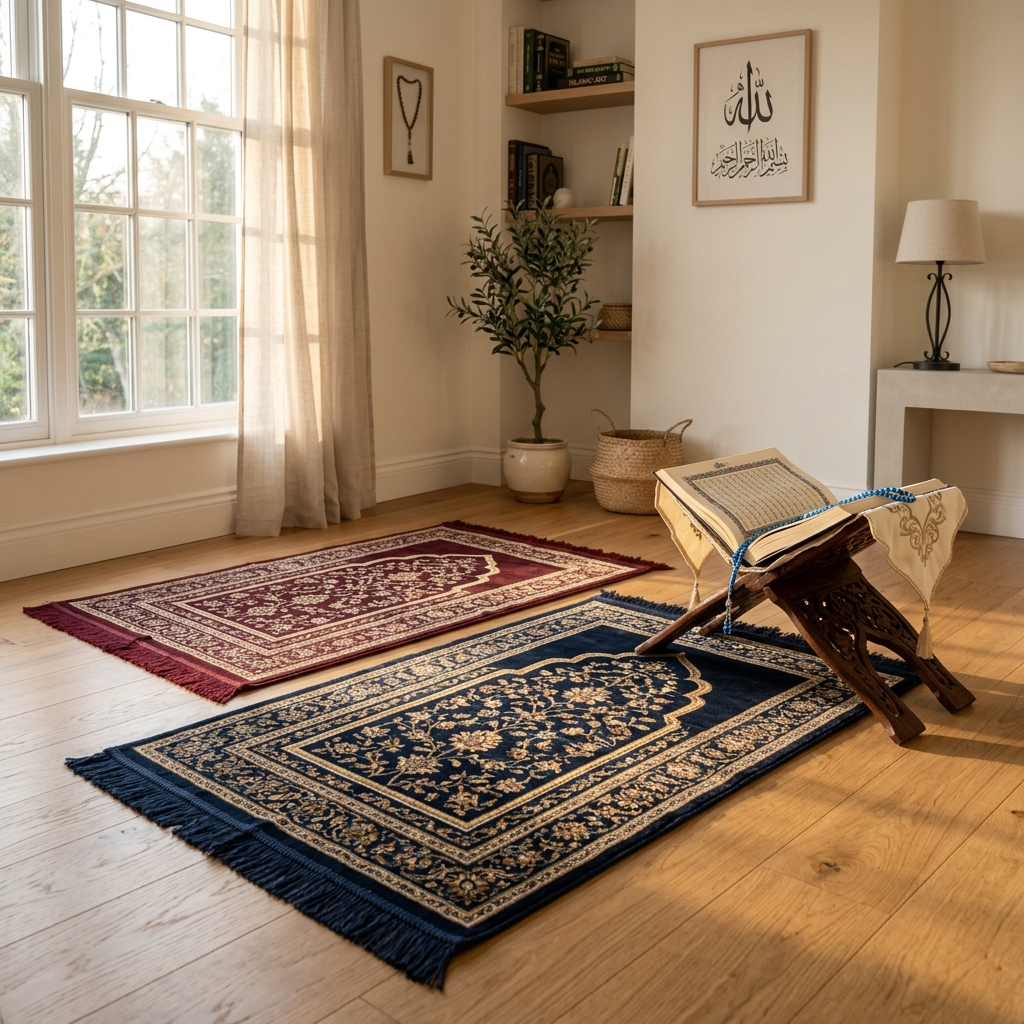
A common question often arises among Muslim men and families: Is a man required to pray every single prayer in the mosque? Did the Prophet Muhammad ﷺ ever pray at home, or lead his wives and family in prayer?
Many Muslims know that praying in congregation (Salah in Jama'ah) at the mosque holds immense spiritual reward. At the same time, others wonder whether a man praying at home with his wife or children is permissible, rewarded, or grounded in authentic Sunnah.
To understand this topic with clarity and balance, we must examine the authentic Hadith and the consensus of Islamic jurisprudence (Fiqh). As the authentic sources reveal, Islam strikes a profound balance between establishing public worship in the mosque and cultivating spiritual light within the home.
1. The Five Obligatory Prayers (Fard) and the Mosque
The foundation of public Islamic life is the mosque. For adult Muslim men who are physically able and have no valid excuse, attending the five daily obligatory prayers in congregation is given paramount importance in the Quran and Sunnah.
The Prophetic Emphasis on the Mosque
The Prophet Muhammad ﷺ emphasized the congregational prayer in the mosque through numerous authentic narrations:
- Multiplied Reward:
"Prayer in congregation is twenty-seven degrees more virtuous than prayer offered individually."
(Sahih al-Bukhari 645, Sahih Muslim 650)
- The Blind Companion:
Abdullah ibn Umm Maktum (may Allah be pleased with him), a blind companion who lived far from the mosque and had no dedicated guide, came to the Prophet ﷺ asking for permission to pray at home. The Prophet ﷺ initially granted him ease, but as he turned to leave, he asked:
"Do you hear the call to prayer (the Adhan)?" He replied: "Yes." The Prophet ﷺ said: "Then respond to it (come to the mosque)."
(Sahih Muslim 653)
- No Prayer Without Excuse:
Ibn Abbas (may Allah be pleased with him) reported that the Prophet ﷺ said:
"Whoever hears the call and does not come, there is no prayer for him i.e., lacking full virtue and reward, except for one who has a valid excuse."
(Sunan Ibn Majah 793, Sunan Abi Dawud 551, Graded Sahih)
Scholarly Rulings on Men Praying in the Mosque
Because of these explicit texts, classical Islamic scholars categorized the ruling on attending the mosque for obligatory prayers as follows:
- Hanbali School & Major Scholars (including Imam Ahmad, Ibn Taymiyyah, Ibn al-Qayyim): Praying the five obligatory prayers in the mosque with the congregation is an individual obligation (Fard 'Ayn) for adult, able men who hear the call and have no valid excuse.
- Shafi'i School: The primary (mu'tamad) position is that congregational prayer is a communal obligation (Fard Kifayah). It must be visibly established in every community and mosque; if established, the community fulfills the obligation.
- Hanafi School: It is Wajib (mandatory) or an emphasized Sunnah resembling obligation (Sunnah Mu'akkadah 'Alal A'yan). Missing it regularly without an excuse is sinful.
- Maliki School: It is a highly emphasized Sunnah (Sunnah Mu'akkadah), carrying tremendous reward.
All scholars agree that for an able man to consistently abandon the mosque for the obligatory prayers out of mere laziness or indifference is blameworthy and deprives him of immense blessings.
2. The Best Place for Sunnah and Voluntary Prayers: The Home
While the mosque is the primary sanctuary for the obligatory (Fard) prayers, the Sunnah and voluntary (Nawafil) prayers are best offered at home.
Many people assume that a pious Muslim should pray everything in the mosque. However, the Prophet ﷺ explicitly commanded men to allocate a significant portion of their prayers to their homes.
Prophetic Commands to Pray at Home
- The Best Prayer Except the Obligatory:
Zayd ibn Thabit (may Allah be pleased with him) reported that the Messenger of Allah ﷺ said:
"O people, offer prayers in your houses, for indeed the best prayer of a person is in his house, except the obligatory prayer."
(Sahih al-Bukhari 731, Sahih Muslim 781)
- Do Not Make Your Homes into Graveyards:
Abdullah ibn Umar (may Allah be pleased with him) reported that the Prophet ﷺ said:
"Perform some of your prayers in your houses and do not make them graves places where no prayer or worship occurs."
(Sahih al-Bukhari 432, Sahih Muslim 777)
- Bringing Divine Goodness into the Home:
Jabir (may Allah be pleased with him) reported that the Prophet ﷺ said:
"When one of you finishes his prayer in the mosque, let him leave a portion of his prayer for his house, for Allah will place goodness (barakah) in his house because of his prayer."
(Sahih Muslim 778)
The Prophet's ﷺ Daily Practice
The Mother of the Believers, Aisha (may Allah be pleased with her), described how the Prophet ﷺ arranged his daily routine:
"The Messenger of Allah ﷺ used to pray four rak'ahs in my house before Dhuhr, then he would go out and lead the people in prayer, then return to my house and pray two rak'ahs. He would lead the people in Maghrib, then return to my house and pray two rak'ahs. He would lead the people in Isha, then enter my house and pray two rak'ahs..."
(Sahih Muslim 730)
Furthermore, the Prophet’s nightly prayers (Tahajjud / Qiyam al-Layl) and Witr were consistently performed in his home.
3. Did the Prophet ﷺ Ever Pray with His Family or at Home?
Yes, frequently and authentically. The Prophet ﷺ prayed at home, led family members in prayer, and praised couples who worship together.
A. Praying with Wives and the Family
- Waking One's Spouse for Prayer:
The Prophet ﷺ encouraged husbands and wives to pray together at night. Abu Hurayrah (may Allah be pleased with him) reported that the Messenger of Allah ﷺ said:
"May Allah have mercy upon a man who gets up at night, prays, and wakes his wife to pray; and if she refuses, he gently sprinkles water on her face. And may Allah have mercy upon a woman who gets up at night, prays, and wakes her husband to pray; and if he refuses, she gently sprinkles water on his face."
(Sunan Abi Dawud 1308, Sunan an-Nasa'i 1610, Graded Sahih)
- Recorded Among Those Who Remember Allah Much:
Abu Sa'id al-Khudri and Abu Hurayrah (may Allah be pleased with them) narrated that the Prophet ﷺ said:
"Whoever wakes up at night and awakens his wife, and they pray two rak'ahs together, they will be recorded among the men and women who remember Allah much."
(Sunan Abi Dawud 1309, Sunan Ibn Majah 1335, Graded Sahih)
B. Leading Congregational Prayer in the Home
The Prophet ﷺ also led congregational prayers inside houses on multiple occasions:
- The Household Congregation of Anas ibn Malik (RA):
Anas ibn Malik (may Allah be pleased with him) reported that the Prophet ﷺ visited the home of Anas's grandmother (Mulaikah) for a meal. Afterward, the Prophet ﷺ said:
"Stand up so that I may lead you in prayer."
Anas said: "I took a reed mat of ours that had turned dark from long use and sprinkled it with water. The Messenger of Allah ﷺ stood upon it, an orphan boy and I lined up behind him, and the old woman my grandmother stood behind us. The Messenger of Allah ﷺ led us in two rak'ahs and then departed."
(Sahih al-Bukhari 380, 860; Sahih Muslim 658)
- The House Prayer with 'Itban ibn Malik (RA):
'Itban ibn Malik (may Allah be pleased with him), a companion from the Ansar, experienced failing eyesight and difficulty reaching the mosque during heavy rain and floods. He invited the Prophet ﷺ to his home so the Prophet ﷺ could pray in a designated area that 'Itban could take as a regular prayer space (musalla).
The Prophet ﷺ arrived with Abu Bakr (may Allah be pleased with him), lined them up, and led them in congregational prayer inside the home (Sahih al-Bukhari 424, Sahih Muslim 33).
4. Valid Excuses for Praying Obligatory Prayers at Home
Islamic law recognizes that circumstances arise where attending the mosque is difficult, harmful, or impossible. In such cases, men are fully excused and receive full reward for praying at home:
- Illness and Physical Incapacity: During the severe illness prior to his passing, the Prophet ﷺ stayed in his room and prayed at home, appointing Abu Bakr (may Allah be pleased with him) to lead the people in the mosque (Sahih al-Bukhari 687).
- Severe Weather (Heavy Rain, Flooding, Extreme Cold, Dangerous Mud):
On stormy or freezing nights, the Prophet ﷺ instructed the Mu'adhin to add to the Adhan:
"Ala sallu fi rihalikum" (Pray in your dwellings / homes).
(Sahih al-Bukhari 666, Sahih Muslim 697)
- Legitimate Fear or Danger: Threat to one's safety, security, or property.
- Caregiving and Essential Duty: Caring for an acutely sick relative who cannot be left alone, or essential emergency work where leaving compromises life or safety.
5. What If a Man Misses the Mosque Congregation?
If a man misses the congregational prayer at the mosque—due to work constraints, oversleeping, travel, or arriving after the congregation has concluded—he should lead his family at home in congregation rather than praying alone.
When a man leads his wife, children, or household members in prayer:
- They all receive the multiplied reward of congregational prayer (Jama'ah).
- It was narrated in Sahih al-Bukhari and Musannaf Ibn Abi Shaybah (2/240) that whenever the prominent companion Anas ibn Malik (may Allah be pleased with him) missed the congregational prayer at the mosque, he would gather his family and servant and lead them in prayer at home.
6. Fiqh of Praying Together at Home: How to Line Up
When leading prayer in the home, the Sunnah provides clear rules for the arrangement of rows (Sufuf):
| Scenario | Alignment |
|---|---|
| Husband & Wife only | The husband stands in front as the Imam; the wife stands directly behind him in her own row (not side-by-side). |
| Husband & One Son | The son stands to the right side of his father, level with him or slightly behind. |
| Husband, Son & Wife | The son stands to the right of the father; the wife stands in a row behind them. |
| Husband, Multiple Sons & Wife / Daughters | The husband stands in front as Imam; the sons form the first row behind him; the wife and daughters form the subsequent row behind the males. |
(Source: Sahih al-Bukhari 380, Sahih Muslim 658)
7. The Beautiful Balance: Mosque vs. Home
Islam does not create a conflict between the mosque and the family home; it harmonizes both:
                  ┌──────────────────────────────────────────────┐
                  │          The Prophetic Prayer Balance        │
                  └──────────────────────┬───────────────────────┘
                                         │
                 ┌───────────────────────┴───────────────────────┐
                 ▼                                               ▼
     ┌───────────────────────┐                       ┌───────────────────────┐
     │      THE MOSQUE       │                       │       THE HOME        │
     ├───────────────────────┤                       ├───────────────────────┤
     │ • 5 Obligatory Fard   │                       │ • Sunnah Rawatib      │
     │ • Community Unity     │                       │ • Tahajjud & Witr     │
     │ • Answering the Adhan │                       │ • Praying with Spouse │
     │ • 27x Multiplied Merit│                       │ • Teaching Children   │
     │ • Public Brotherhood  │                       │ • Expelling Darkness  │
     └───────────────────────┘                       └───────────────────────┘
- The Mosque builds community: It unites the neighborhood, fosters brotherhood, erases social divides, and maintains public obedience to Allah.
- The Home builds spirituality: Praying voluntary prayers, Tahajjud, and family congregations fills the household with angels, blessings (barakah), and peace, while teaching children how to worship by direct example.
Conclusion & Practical Takeaways
Should men always pray in the mosque?
- For the Five Obligatory Prayers (Fard): Men should make every sincere effort to pray in the mosque with the congregation whenever possible, as this was the consistent practice of the Prophet ﷺ and his companions.
- For Sunnah and Voluntary Prayers (Nawafil): Men are actively encouraged to pray them at home to bless their households and follow the explicit Prophetic command.
- With Family and Spouses: Praying together at home—whether night prayers (Tahajjud), voluntary prayers, or obligatory prayers when excused from the mosque—is an authentic, rewarding, and beloved Prophetic Sunnah.
May Allah make our footsteps steady towards His houses, fill our homes with the light of prayer, and grant us sincerity in all our acts of worship. Ameen.
References
- Sahih al-Bukhari: Hadith 380, 424, 432, 644, 645, 666, 687, 731, 860
- Sahih Muslim: Hadith 33, 418, 650, 651, 653, 658, 697, 730, 777, 778, 781
- Sunan Abi Dawud: Hadith 551, 554, 1308, 1309
- Sunan Ibn Majah: Hadith 793, 1335
- Sunan an-Nasa'i: Hadith 1610
- Ibn Qudamah, Al-Mughni (Discussion on the Ruling of Congregational Prayer)
- Imam an-Nawawi, Al-Majmu' Sharh al-Muhadhdhab & Sharh Sahih Muslim
- Ibn Abi Shaybah, Al-Musannaf (Vol. 2, p. 240)
This blog post is based on authentic Islamic sources from the Quran, Sahih Hadith, and classical scholarly consensus. For personalized religious verdicts regarding individual circumstances, please consult a qualified Islamic scholar.