The Virtue of Patience (Sabr): Finding Strength in Difficult Times
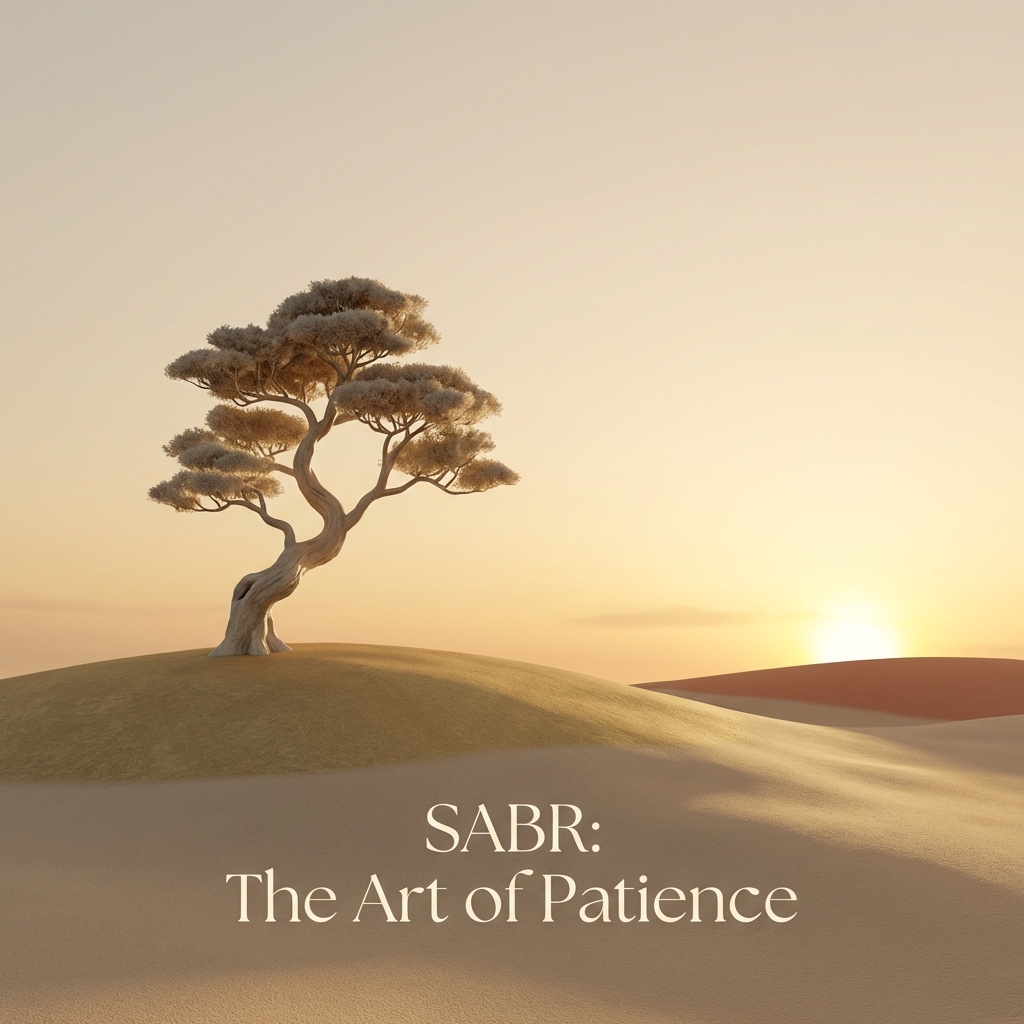
In the journey of life, challenges and trials are inevitable. Whether it is a personal loss, a financial struggle, or the daily stresses of a fast-paced world, we are constantly tested. At the heart of a believer's response to these trials is Sabr—a term often translated as "patience," but encompassing much more: steadfastness, endurance, and restraint for the sake of Allah.
The Quran mentions Sabr over 90 times, highlighting its critical importance in our spiritual journey. It is described as a "light" (diya') that guides us through the darkness of hardship.
"And seek help through patience and prayer; and indeed, it is difficult except for the humbly submissive to Allah."
(Surah Al-Baqarah, 2:45)
Understanding the Essence of Sabr
Linguistically, Sabr comes from the root word meaning "to withhold" or "to restrain." In a spiritual context, it means restraining the soul from despondency, the tongue from complaining (to other than Allah), and the limbs from expressing frustration (like striking one's face or tearing clothes).
Imam Ibn al-Qayyim defined Sabr as: "A person’s ability to prevent his heart from feeling dissatisfied with the Decree of Allah, and to prevent his tongue from complaining, and to prevent his limbs from acting out of anger." (Madarij al-Salikin)
The Status of Sabr in Islam
The Prophet Muhammad ﷺ emphasized that Sabr is a gift that exceeds all others:
"No one is given a gift better and more comprehensive than patience."
(Sahih al-Bukhari and Sahih Muslim)
He also taught us that the quality of our faith is directly linked to our Sabr:
"How wonderful is the affair of the believer, for his affairs are all good... if something good happens to him, he is thankful and that is good for him. If something bad happens to him, he is patient and that is good for him."
(Sahih Muslim)
The Three Levels of Sabr
Scholars, including Ibn al-Qayyim, have categorized Sabr into three distinct levels, each essential for spiritual maturity.
1. Sabr in Obeying Allah (As-Sabru 'ala Ta'ah)
This is the patience required to fulfill our obligations consistently. Standing for Fajr when sleepy, maintaining focus in Salah, and being honest in dealings despite temptations all require a form of steadfastness.
Allah says:
"Lord of the heavens and the earth and whatever is between them - so worship Him and have patience for His worship."
(Surah Maryam, 19:65)
2. Sabr in Abstaining from Sin (As-Sabru 'an al-Ma'siyah)
This level involves the self-control to resist lowercase desires and stay away from what Allah has forbidden. It is the internal struggle against the lower self (Nafs).
"And as for him who feared the position of his Lord and prevented the soul from unlawful inclination, then indeed, Paradise will be his refuge."
(Surah An-Nazi'at, 79:40-41)
3. Sabr During Calamities (As-Sabru 'ala al-Aqdar)
This is the most common understanding of Sabr—the endurance shown when facing trials, illnesses, losses, or unexpected hardships.
"And We will surely test you with something of fear and hunger and a loss of wealth and lives and fruits, but give good tidings to the patient."
(Surah Al-Baqarah, 2:155)
The Prophet ﷺ clarified that true Sabr at this level is most vital at the very onset of the trial:
"Patience is only at the first stroke of a calamity."
(Sahih al-Bukhari)
The Divine Rewards of Sabr
Allah promises immense rewards for those who endure with beauty and faith.
1. Divine Proximity and Company
"Indeed, Allah is with the patient."
(Surah Al-Baqarah, 2:153)
There is no greater comfort than knowing the Lord of the worlds is with you during your most difficult moments.
2. Boundless Reward
Most good deeds have a specified reward, but for Sabr, Allah says:
"Indeed, the patient will be given their reward without account i.e., limit."
(Surah Az-Zumar, 39:10)
3. Success and Leadership
Patience, combined with Yaqin (certainty), is the path to spiritual leadership:
"And We made from among them leaders guiding by Our command when they were patient and when they were certain of Our signs."
(Surah As-Sajdah, 32:24)
Practical Strategies to Develop Sabr
How can we move from a state of frustration to a state of beautiful patience (Sabrun Jamil)?
1. Understand the Reality of This World (Dunya)
Recognize that this life is a place of testing, not permanent perfection. Allah tells us:
"Every soul will taste death. And We test you with evil and with good as trial; and to Us you will be returned."
(Surah Al-Anbiya, 21:35)
2. Reflect on the Rewards of Hardship
The Prophet ﷺ taught that every difficulty erases sins:
"No fatigue, nor disease, nor sorrow, nor sadness, nor hurt, nor distress befalls a Muslim, even if it were the prick he receives from a thorn, but that Allah expiates some of his sins for that."
(Sahih al-Bukhari)
3. Look at Those Facing Greater Trials
When we are tested, we often feel alone. Looking at history—the lives of the Prophets, the Companions, and those currently facing immense oppression—can give us perspective and strength.
The Prophet Muhammad ﷺ faced the loss of his parents, his wife Khadijah, his uncle Abu Talib, and all of his children during his lifetime, yet he remained the most patient of men.
4. Practice Gratitude (Shukr)
Sabr and Shukr are two sides of the same coin. By focusing on the blessings that remain, we find the strength to endure what has been taken away.
5. Make Constant Dua
Ask Allah for Sabr and Thabat (steadfastness). One of the most beautiful Quranic Duas for patience is:
"Our Lord, pour upon us patience and plant firmly our feet and give us victory over the disbelieving people."
(Surah Al-Baqarah, 2:250)
The Difference Between Sabr and Pasivity
A common misconception is that Sabr means doing nothing. On the contrary, Sabr is an active state.
- If you are ill, Sabr is seeking treatment while being content with Allah's decree.
- If you are facing injustice, Sabr is striving for justice while maintaining your moral character and trust in Allah.
- If you are struggling financially, Sabr is working hard while not despairing of Allah's mercy.
Sabr is about the inner state of the heart while the outer self takes all necessary and permissible actions.
Conclusion: The Path to Peace
Developing Sabr is not an overnight transformation; it is a lifelong discipline. It requires a constant renewal of intention and a deep trust in Allah’s wisdom. When we master the art of Sabr, we find a level of peace that remains unshaken regardless of external circumstances.
As you navigate your current struggles, remember that Allah sees your effort. He sees the tear you hold back, the complaint you swallow, and the effort you make to stand for prayer when your heart is heavy.
May Allah grant us all Sabrun Jamil (a beautiful patience) and make us among those who are rewarded "without account." Ameen.
References
Quranic Verses
- Surah Al-Baqarah (2:45, 2:153, 2:155-157, 2:250)
- Surah Az-Zumar (39:10)
- Surah Maryam (19:65)
- Surah As-Sajdah (32:24)
- Surah Al-Anbiya (21:35)
- Surah An-Nazi'at (79:40-41)
Hadith Collections
- Sahih al-Bukhari: Narrations on the reward of patience and the Prophet's trials.
- Sahih Muslim: The Hadith on the wonder of the believer's affair.
- Riyad as-Salihin: A comprehensive chapter dedicated to Sabr.
Classical Scholarship
- Imam Ibn al-Qayyim: Madarij al-Salikin (Stations of the Seekers) and Uddat as-Sabirin (The Provisions of the Patient).
- Imam al-Ghazali: Ihya Ulum al-Din (Revival of the Religious Sciences), Book on Patience and Gratitude.
- Hasan al-Basri: Sayings on the nature of patience and the testing of the heart.
This blog post is designed to provide spiritual guidance based on authentic Islamic sources. For specific advice regarding emotional or mental health, always seek professional help alongside your spiritual practices.