Decoding Islamic Honorifics: What do SAW, AS, and RA mean?
When reading Islamic literature, blog posts, or even social media comments, you will often find abbreviations like SAW, RA, or AS following certain names. For someone new to the faith or just beginning their journey, these can feel confusing.
In Islam, these are not just formal titles; they are honorifics—short, powerful prayers (Du'as) that we recite out of love, respect, and reverence. They are a way of acknowledging the incredible contributions of the Prophets, the Companions, and the Scholars who came before us.
In this guide, we’ll break down the most common ones you'll encounter.
1. Blessings on the Prophets
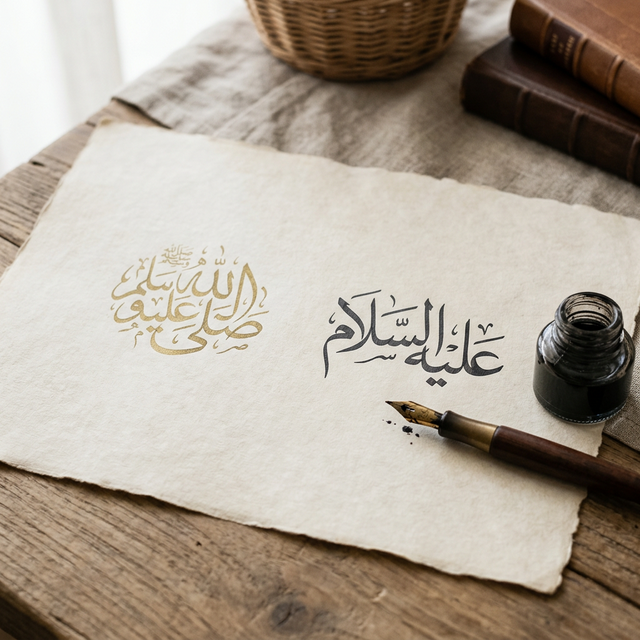
SAW / ﷺ (Sallallahu Alaihi Wa Sallam)
Meaning: "May the blessings and peace of Allah be upon him."
This is also known as the Salawat. It is used exclusively after the name of the Prophet Muhammad ﷺ. Allah (SWT) Himself commands us in the Quran to send blessings upon him:
"Indeed, Allah and His angels send blessings upon the Prophet. O you who have believed, ask Allah to send blessings upon him and ask Allah to grant him peace."
(Surah Al-Ahzab, 33:56)
Why we say it: Whenever we hear or mention the Prophet's name, it is an act of worship to recite this. The Prophet ﷺ said that whoever sends one blessing upon him, Allah will send ten blessings upon that person (Sahih Muslim).
AS (Alaihis-Salam)
Meaning: "Peace be upon him."
This is used for all other Prophets and Messengers—such as Ibrahim (Abraham), Musa (Moses), Isa (Jesus), and others (May peace be upon them all). It is also used for the Archangels, such as Jibril (Gabriel) and Mika'il (Michael).
2. Respect for the Companions and Family
RA (Radhiyallahu Anhu / Anha / Anhum)
Meaning: "May Allah be pleased with him / her / them."
This is used for the Sahabah (the Companions of the Prophet ﷺ).
- RA (Anhu): For a male companion (e.g., Abu Bakr RA).
- RA (Anha): For a female companion (e.g., Khadija RA).
- RA (Anhum): For a group of companions.
We use this because Allah (SWT) explicitly states in the Quran that He is pleased with them and they are pleased with Him (Surah At-Tawbah, 9:100).
3. Honoring the Scholars and the Deceased
RH / Rahimahullah
Meaning: "May Allah have mercy on him."
This is used for great scholars, leaders, and pious Muslims who have passed away after the generation of the companions. For example, when mentioning Imam Al-Ghazali or Imam Bukhari, we say Rahimahullah.
It is a beautiful way of asking for Allah’s mercy and forgiveness for those who spent their lives preserving and spreading the Deen.
4. Other Common Terms
SWT (Subhanahu Wa Ta'ala)
Meaning: "Glorified and Exalted is He."
This is used exclusively when mentioning the name of Allah. It serves to remind us of His supreme status, far above any imperfections or human attributes.
PBUH
Meaning: "Peace Be Upon Him."
This is the English translation of Alaihis-Salam (AS) or sometimes used as a substitute for SAW. While common in English literature, many scholars prefer using the Arabic transliterations (SAW/AS) or the calligraphy (ﷺ) to maintain the depth of the original prayer.
Why Do These Symbols and Abbreviations Matter?
At first glance, it might seem like a lot of "extra" words. However, in Islamic etiquette (Adab), these honorifics serve three vital purposes:
- Refining Character: They teach us to be humble and respectful when discussing people of knowledge and status.
- Gaining Reward: Every time you type, read, or say these phrases, you are making a Du'a and earning Hasanat (rewards).
- Spiritual Mindfulness: They act as "speed bumps" in our reading, forcing us to pause and remember the spiritual weight of the names we are mentioning.
Summary Table
| Abbreviation | Full Arabic Term | Translation | Used For |
|---|---|---|---|
| SWT | Subhanahu Wa Ta'ala | Glorified and Exalted be He | Allah |
| SAW / ﷺ | Sallallahu Alaihi Wa Sallam | Peace and Blessings be upon him | Prophet Muhammad ﷺ |
| AS | Alaihis-Salam | Peace be upon him | Prophets & Angels |
| RA | Radhiyallahu Anhu/Anha | May Allah be pleased with him/her | Companions (Sahabah) |
| RH | Rahimahullah | May Allah have mercy on him | Deceased Scholars/Pious |
Conclusion
The next time you see these letters, remember that they are more than just abbreviations. They are a bridge between us and the great figures of our history—a small act of love and a massive source of blessing.
May Allah allow us to speak of His Prophets and righteous servants with the respect they deserve.
References
- The Holy Quran: Surah Al-Ahzab (33:56), Surah At-Tawbah (9:100).
- Sahih Muslim: Hadith on the virtues of sending blessings on the Prophet ﷺ.
- Riyadh as-Salihin: Chapter on the obligation of sending blessings on the Messenger of Allah ﷺ.
Helping you understand the essentials of faith, one step at a time.